
When it comes to raising healthy and happy animals, providing adequate shelter is one of the most important decisions any livestock owner will make. Whether you’re caring for horses, goats, or other farm animals, the right structure can make all the difference in their well-being and your daily routine. Properly designed animal sheds offer protection from harsh weather, predators, and disease while giving your animals a safe place to rest and recover. But with so many options available, how do you know which type of shelter is right for your specific needs?
In this comprehensive guide, we’ll explore everything you need to consider when choosing shelter for your livestock. From understanding basic requirements to evaluating different materials and designs, this article will help you make an informed decision that benefits both you and your animals for years to come.
Understanding the Basic Needs of Different Animals
Before diving into shelter designs, it’s essential to understand that different animals have different requirements. What works for a horse may not necessarily be ideal for goats, and vice versa.
Horses are large animals that need considerable space to move around. They’re also more sensitive to poor ventilation than many other livestock. A horse’s shelter needs to accommodate their size while ensuring good air circulation to prevent respiratory issues. Horses also tend to be more social and may prefer shelters that allow them to see their companions.
Goats are incredibly adaptable and hardy creatures, but they have some unique quirks. They dislike rain and will avoid getting wet whenever possible. Goats are also natural climbers and curious animals, so any shelter needs to be secure and free from hazards they might investigate. Their smaller size means they don’t need as much headroom as horses, but they still appreciate a dry, draft-free space.
Other livestock like sheep, cattle, and pigs each have their own considerations. Sheep need protection from predators and extreme weather, pigs require excellent drainage and temperature control, and cattle need sturdy structures that can withstand their size and strength.
Location and Site Planning
Where you place your shelter is just as important as what type you build. A well-located shelter can save you countless hours of maintenance and make daily chores significantly easier.
Start by evaluating your property’s drainage patterns. You want to position your shelter on higher ground that stays dry even during heavy rains. Low-lying areas collect water, creating muddy conditions that can lead to hoof problems and disease. Good drainage also means less maintenance for you and a healthier environment for your animals.
Consider the prevailing winds in your area. Position the shelter so that the open side faces away from the dominant wind direction. This provides a windbreak and keeps the interior more comfortable during cold weather. At the same time, you want to ensure there’s still adequate ventilation to prevent moisture buildup and ammonia accumulation.
Accessibility is another crucial factor. You’ll need to bring feed, bedding, and supplies to the shelter regularly. You might also need vehicle access for veterinary care or eventual repairs. Think about how you’ll manage manure removal and plan for easy access to cleaning equipment.
Don’t forget to check local zoning laws and building codes before starting any construction. Some areas have specific requirements for agricultural structures, including setbacks from property lines and maximum sizes. It’s far better to do this research upfront than to face problems after investing time and money into your project.
Types of Shelter Structures
There are several common types of livestock shelters, each with distinct advantages and limitations.
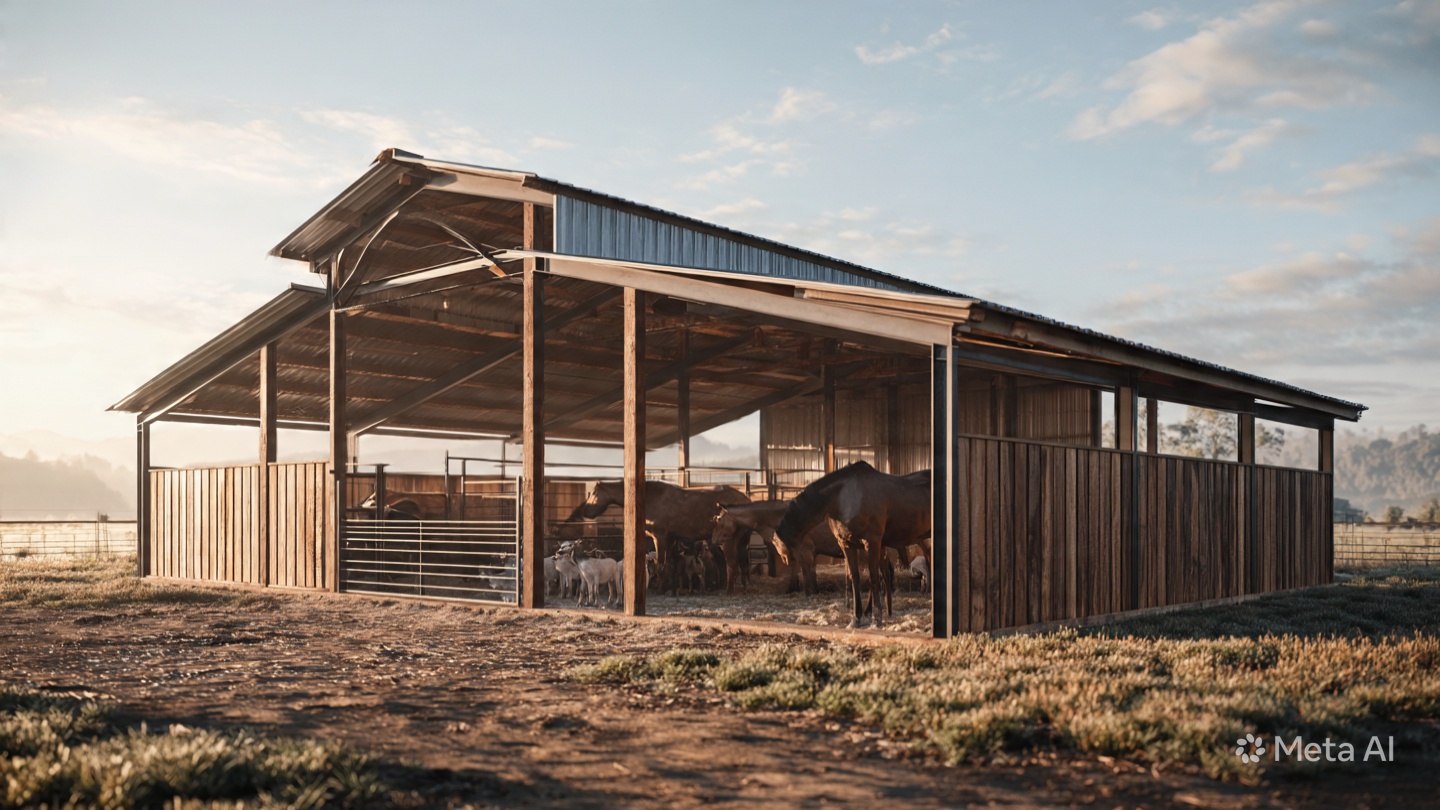
Three-sided shelters are among the most popular choices for horses and goats. As the name suggests, these structures have three solid walls with one open side. They’re relatively simple to construct, provide excellent ventilation, and allow animals to come and go as they please. The open side should face away from prevailing winds, and the roof should have enough overhang to keep rain from blowing inside.
Run-in sheds are similar to three-sided shelters but are typically larger and designed specifically for horses. They allow horses to take refuge as needed while still spending most of their time outdoors. Many horse owners prefer run-in sheds because they accommodate horses’ natural desire to move around and socialize.
Fully enclosed barns offer maximum protection but require more investment and maintenance. These structures are ideal in areas with severe weather conditions or for animals that need regular handling. Barns typically include stalls, storage areas for feed and equipment, and sometimes even space for a tack room or washing area.
Portable shelters have gained popularity in recent years, especially for smaller operations. These can be moved to fresh ground periodically, which helps distribute manure more evenly across pastures and reduces mud buildup around the shelter. They’re often less expensive than permanent structures and can be a good option for renters or those who might relocate.
Pole barns represent a middle ground between simple shelters and fully enclosed barns. These structures use large poles buried in the ground for support, making them sturdy yet relatively simple to build. Pole barns can be customized to include enclosed areas, open-front sections, or a combination of both.
Size Considerations and Space Requirements
Getting the size right is critical for animal comfort and practical management. Undersized shelters lead to crowding, behavioral issues, and potential injuries. Oversized structures cost more to build and maintain than necessary.
For horses, a general rule is to provide at least 100 square feet per animal in a run-in shed setting. The ceiling should be at least eight feet high to allow horses to lift their heads comfortably. Doorways need to be wide enough to prevent injuries; four feet is typically a minimum, though wider openings reduce the risk of horses getting stuck or panicking.
Goats need less individual space, typically around 15 to 25 square feet per animal for shelter purposes. However, they benefit from multiple smaller shelters spread across their pasture rather than one large structure. This allows different groups to establish their own territories and reduces conflict.
Remember to plan for future growth as well. Many livestock owners start small and expand their herds over time. Building a shelter that can accommodate additional animals or be expanded later is often wiser than building exactly for current needs.
Material Selection and Durability
The materials you choose will significantly impact your shelter’s longevity, maintenance requirements, and overall cost.
Wood is traditional and widely available. Treated lumber resists rot and insects, making it suitable for ground-contact applications. However, wood requires regular maintenance and can be damaged by animals that like to chew or rub against walls. Some wood treatments can be toxic to animals if ingested, so choose materials carefully.
Metal offers excellent durability and requires minimal maintenance. Steel framing and metal siding are common choices for larger structures. Metal doesn’t rot, isn’t susceptible to termites, and can withstand harsh weather conditions. The main drawbacks are cost and the potential for condensation issues if not properly insulated.
Combination structures using both wood and metal can offer the best of both worlds. Wooden posts and framing provide strength and are easier to work with during construction, while metal siding and roofing reduce maintenance requirements.
For flooring, consider your specific situation carefully. Dirt floors are simplest and often work well for horses and goats, especially when covered with appropriate bedding. Concrete floors are easier to clean but can be hard on animals’ legs and require good drainage systems. Some owners use rubber mats over concrete or packed dirt to provide cushioning and improve comfort.
Ventilation and Air Quality
Good ventilation is absolutely essential for animal health. Poor air quality leads to respiratory problems, increased disease transmission, and general discomfort for your livestock.
Natural ventilation works well for most three-sided and run-in shelters. The open design allows fresh air to circulate while the solid walls provide protection from wind and precipitation. For enclosed barns, you’ll need to plan openings near the roofline to allow warm, moist air to escape while cooler air enters through lower openings.
Avoid completely closing off shelters, even in cold weather. Animals generate significant heat and moisture through respiration, and that moisture needs somewhere to go. Completely enclosed spaces quickly become damp and stuffy, creating ideal conditions for bacteria and mold growth.
Consider adding adjustable vents or panels that can be opened or closed depending on weather conditions. This allows you to fine-tune air circulation throughout the year.
Seasonal Considerations
Your shelter needs to perform well year-round, which means planning for seasonal variations in weather and animal behavior.
Winter brings challenges like freezing temperatures, snow loads on roofs, and increased moisture from animals spending more time indoors. Ensure your roof can handle expected snow loads for your region. Good drainage becomes even more critical when the ground freezes and thaws repeatedly.
Summer requires attention to shade and air circulation. Animals can suffer heat stress just as much as cold stress. Position shelters where they’ll provide shade during the hottest parts of the day, and ensure adequate airflow to prevent overheating.
Spring and fall bring variable conditions and often significant mud problems. This is when good drainage reveals its true value. Consider installing additional drainage features like French drains or gravel pads around shelter entrances if you expect significant mud issues.
Budget Planning and Cost Considerations
Shelter costs vary dramatically based on size, materials, and complexity. Developing a realistic budget before starting your project helps prevent unpleasant surprises.
Simple three-sided shelters can be built for relatively modest amounts, especially if you have some construction experience and access to tools. More complex structures like fully enclosed barns require significant investment in both materials and labor.
Don’t forget to factor in ongoing costs when budgeting. A cheaper structure that requires frequent repairs or replacement may cost more in the long run than a higher-quality initial investment. Bedding, maintenance supplies, and eventual repairs should all be part of your financial planning.
Making Your Final Decision
Choosing the right shelter involves balancing multiple factors including your specific animals, climate, budget, and property characteristics. Take time to evaluate each consideration carefully rather than rushing into construction.
Start by clearly defining your needs. How many animals do you have, and do you expect that number to change? What are the most significant weather challenges in your area? How much time can you realistically dedicate to maintenance?
Visit other farms if possible to see different shelter types in action. Talking with experienced livestock owners in your area can provide invaluable insights into what works well for local conditions.
Remember that the best shelter is one that meets your animals’ needs while fitting your practical requirements and budget. There’s no single perfect solution for every situation, but careful planning will help you create a shelter that serves you and your animals well for years to come.
Building appropriate shelter for your livestock is an investment in their health and your convenience as their caretaker. By understanding basic requirements, evaluating your options thoughtfully, and planning for both current needs and future changes, you can create a structure that truly supports your agricultural goals while providing the protection your animals deserve.